|
|
|
Summary:
In this horse, the fibrinoid necrosis is associated
with inflammation of arteries (arteritis).
Multiple vessels are affected, with the lesions ranging from acute (hours)
to chronic (weeks).
The diagnosis in this horse was polyarteritis
nodosa. This is a condition seen sporadically in all domestic animals,
especially involving small and medium sized renal, coronary, hepatic and
gastrointestinal arteries. The condition is thought to be immune-mediated.
Some affected dogs have had rheumatoid arthritis or systemic lupus erythematosus
but in most cases the underlying cause is not identifiable. The lesions
are often incidental findings at necropsy but in some animals they may
cause clinical disease.
The earliest lesions are characterised by fibrinoid
necrosis and neutrophilic infiltration, with variable associated oedema,
haemorrhage and thrombosis.
Chronic lesions are characterised by mononuclear leukocytic infiltration
(especially by lymphocytes), vascular and perivascular fibrosis and narrowing
of the vessel lumen.
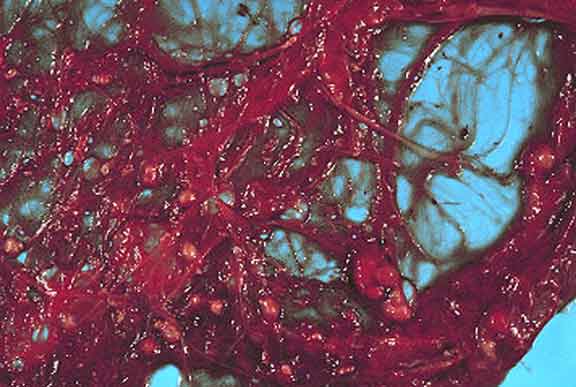
The name of the condition refers to the often nodular (nodose) gross
appearance of the multiple (poly) affected arteries. This is an example
of polyarteritis nodosa involving mesenteric arteries.
|

